
Naslov   Mapa  O društvu   About Us
CROATIAN MUSICOLOGICAL SOCIETY
KROATISCHE MUSIKWISSENSCHAFTLICHE GESELLSCHAFT
SOCIÉTÉ CROATE DE MUSICOLOGIE


HMD


www.hmd-music.hr
zapamti
moja prva strana


Besplatne novosti
HMD-a


Geo Visitors Map


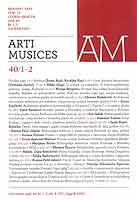
Arti musices

Arti musices, Croatian Musicological Review (Am)

Am je jedini specijalizirani znanstveni muzikološki časopis u Hrvatskoj. Izlazi kontinuirano od 1969. godine. Službeno je glasilo HMD-a od 1992., a suizdavači su HAZU i Muzička akademija Sveučilišta u Zagrebu. U njemu je dosad objavljeno više stotina članaka uglavnom hrvatskih muzikologa iz raznih područja hrvatske glazbene povijesti. Članci se objavljuju na hrvatskom (povremeno i na stranim jezicima) sa sažecima na engleskom jeziku.

Am is the only specialized scholarly journal in the field of musicology in Croatia. It has been published continously since 1969. It has been the official journal of the Croatian Musicological Society since 1992, published together with the Croatian Academy of Science and Arts and the Zagreb University Music Academy. The several hundred articles by mostly Croatian musicologists published to date have dealt with different areas of mainly Croatian music history. Articles are published in Croatian (some also in English and German) with summaries in English.

ISSN 0587-5455

Sv. / Vol. 32, br. / Nos 1&2, 2001

Sv. / Vol. 33, br. / Nos 1&2 2002

(i svesci ranijih godina/and back issues annualy):

Kn 240,00 + tuzemna poštarina

US$ 46.00 + postage

(US$ 6-8 per volume/two issues/for Europe;

US$ 8-12 per volume air mail overseas)


  • ARTI MUSICES 37/2 (2006)

    Arti music., god. 37, br. 2, Zagreb 2006.

    SADRŽAJ - CONTENTS

    1. IZVORNI ZNANSTVENI ČLANCI - ORIGINAL SCIENTIFIC PAPERS

      • Koraljka KOS: Muzikolog Lovro Županović (1925.-2004.). Uz drugu obljetnicu smrti

        Nacrtak:
        Studija je posvećena muzikološkom djelu Lovre Županovića u povodu druge obljetnice njegove smrti. Težište Županovićevih istraživanja bila je hrvatska glazbena baština, čijoj je revitalizaciji pridonio kako svojim muzikološkim tekstovima tako i kritičkim notnim izdanjima. U težnji da hrvatsku glazbu prikaže i vrjednuje u europskome kontekstu Županović joj ponekad pridaje sjaj koji ona nije imala, a na tragu Kuhačevih shvaćanja „hrvatskoga nacionalnog smjera“ traži u njoj elemente narodnog melosa. Županović je desetljećima bio jedna od središnjih osobnosti hrvatske muzikološke scene, svestran kao istraživač, glazbenik i inicijator izvedbi hrvatske glazbe. Njegov bogat muzikološki opus još čeka podrobnu analizu i vrjednovanje.

        Summary: The Musicologist Lovro Županović (1925-2004). On the Second Universary of Death

        The study is dedicated to the musicological work of Lovro Županović on the occasion of the second anniversary of his death. Croatian musical heritage was the focus of Županović’s research and he contributed to its revitalization by his musicological texts as well as by critical music editions. Particularly prominent among his projects are the series of critical music editions Spomenici hrvatske glazbene prošlosti [Monuments of Croatian Musical Past], followed by the critical edition of the most important Croatian Baroque collection of church songs in the Croatian and Latin languages Cithara octochorda (Zagreb, 1757), and the monograph on Vatroslav Lisinski (1819-1854). Županović had been systematically searching for sources of early Croatian music and documents about musical life and musicians, and he rescued from oblivion a series of forgotten works and figures. As a historian, he displayed Croatian musical culture at all its levels, including music theory, performing art, musical education, handicrafts and amateurism. Aspiring to represent and evaluate Croatian music in the European context, Županović at times attaches to it a splendour that Croatian music did not possess, and, in accordance with Franjo Kuhač's (1834-1911) views on „Croatian national orientation“, he looks for the elements of folk music in it. For decades Županović had been one of the kingpins on the Croatian musicological scene, versatile as a researcher, musician and initiator of the Croatian music performances. His rich musicological opus is still awaiting a detailed analysis and evaluation.

      • Vjera KATALINIĆ: „Neumrlom skladatelju“: O recepciji Mozartovih opera u Zagrebu u 19. stoljeću

        Nacrtak:
        Prema podatcima iz sekundarnih izvora, Mozartove opere Don Giovanni i Die Zauberflöte postavljene su u Zagrebu 1830-ih godina sa znatnim uspjehom, no u to doba jedine zagrebačke novine – Agramer politische Zeitung – vrlo malo prostora posvećuju izvedbama glazbeno-scenskih djela. Tek od 1870-ih godina većina zagrebačkih novina donosi najave i osvrte na izvedbe Mozartovih opera: Don Giovanni je postavljen 1875. i 1898., a Die Zauberflöte 1899. godine. Tako su ove dvije Mozartove opere jedina glazbeno-scenska djela bečke klasike koja su postavljana sustavno tijekom 19. stoljeća u Zagrebu u svima trima kazalištima (tzv. Amadejevom, Stankovićevom i u današnjoj kazališnoj zgradi), na njemačkom, odnosno hrvatskom jeziku. U tekstu se donose obilježja izvedbi i postava te se na temelju novinskih napisa prate promjene reakcije novinara i publike u recepciji tih djela.

        Summary: To the „Immortal Composer“: On the Reception of Mozart's Operas in 19th Century Zagreb

        According to data from secondary sources, Mozart’s operas Don Giovanni and Die Zauberflöte were staged with considerable success in Zagreb during the 1830s, but the only Zagreb newspaper Agramer politische Zeitung devoted very little space to musical-scenic works performances at that time. It was not until the 1870s that most of Zagreb newspapers gave announcements and reviews on performances of Mozart’s operas; Don Giovanni was staged in 1875 and in 1898 and Die Zaubeflöte in 1899. So these two Mozart operas were the only ones that had been systematically staged in Zagreb in all three theatres (in so-called Amadé Theater, Stanković Theatre and in today’s theatre building) in the German and/or the Croatian language during the 19th century. The characteristics of performances and casts are given in this paper and, on the basis of the newspaper reviews, changes in the journalists’ and the audience’s reactions in the reception of those works are monitored.

      • Mirjana ŠKUNCA: Životne staze Ćirila Metoda Hrazdire (1868.-1926.) izvan domovine (I. dio)

        Nacrtak:
        Češki višestruko nadareni glazbenik Ćiril Metod Hrazdira (1868.-1926.) je u prvim desetljećima prošlog stoljeća značajno sudjelovao u stvaranju temelja hrvatskoj, u prvom redu splitskoj glazbenoj reprodukciji i produkciji na njenom razvojnom putu od – u njegovo vrijeme u nas još pretežnog – amaterizma i „diletantizma“, do profesionalnih oblika njegovanja i posredovanja glazbe, kako njenog izvođenja tako i poduke i informiranja o njoj. Ove se (2006.) godine navršava osamdeset godina od njegove smrti, pa je to povod da na ovome mjestu podsjetimo na nj, te tako pokušamo vratiti djelić pažnje koju mu ova sredina duguje za sve što je svojedobno za nju učinio.

      • Božidar GRGA: Ima li Split Nakićeve orgulje?

        Nacrtak:
        Polazeći od činjenice da su 1901. godine orgulje splitske katedrale Sv. Dujma prodane sestrama klarisama u Splitu, autor u ovom radu donosi četiri dosadašnje pretpostavke o graditelju tih orgulja. U nastavku rada na posve nov način iznosi tehničke podatke o orguljama u crkvi Sv. Klare u Splitu. Podatci su rezultat pažljivog proučavanja, mjerenja i uspoređivanja, i omogućuju pouzdani pristup rješavanju dvaju važnih pitanja: kada su orgulje nastale, i tko ih je gradio. Pažljivim iščitavanjem dosadašnjih radova, a nadasve detaljnom analizom samog instrumenta, autor afirmativnije dokazuje pretpostavku da su ove orgulje ipak djelo glasovitog orguljara Petra Nakića Šibenčanina, i da su nastale sredinom XVIII. stoljeća. (Lorenzo Nassimbeni u članku Gli ultimi anni di vita dell'organaro Pietro Nachini e il suo Testamento, L'Organo, Anno XXXI, Patron editore, Bologna 1998, str. 175, prilaže Nakićevu oporuku načinjenu 16. travnja 1769. Citat dijela oporuke: «…U ime Boga vječnoga. Amen. Ja D. Pietro Nachik, pokojnog Giorgia iz grada Šibenika sada nastanjen u ovom gradu sastavio sam ovaj dokument rukom svoga povjerenika, čija će vrijednost…»)

        Summary: Is Nakić's Organ in Split?

        Proceeding from the fact that the organ of the Split Cathedral was sold in 1901 to the Order of the Sisters of St Clare in Split, the author presents in this paper four previous assumptions about the builder of that organ. In the continuation of the paper, he provides a completely new slant on the technical data concerning the organ in St Clare's Church in Split. The data are the result of careful study, measurement and comparison and enable a reliable approach to the solving of two important issues: when the organ was built and who built it. By careful reading of papers to date and, above all, by detailed analysis of the instrument itself, the author proves the assumption that this organ is the work of the distinguished organ builder, Petar Nakić from Šibenik, and that it was built at the mid-18th century.

    2. OTKRIĆA, NOVOSTI – NEW INSIGHTS

      Ljerka PERČI: Prilog poznavanju glazbenog života Varaždina od 1836. do sredine 1842. godine

      Nacrtak:
      Na temelju istraživanja fonda Poglavarstva grada Varaždina u Državnom arhivu Varaždin, iznose se brojni događaji vezani uz glazbeni život Varaždina između 1836. i 1842. godine. Posebno se obrađuju zapisi o Ivanu Padovcu i njegovoj obitelji. Pri obradi arhivske građe uzete su u obzir od ranije poznate činjenice vezane uz Glazbeno društvo i Ivana Padovca, koje je objavio Krešimir Filić 1972. godine u svojoj knjizi Glazbeni život Varaždina. Ukazuje se na postojanje Padovčeve skladbe Gallop, napisane za karneval 1839. godine, pohranjene u Gradskom muzeju Varaždin, koja nije uključena u Filićev popis Padovčevih djela, i manje poznati koncertni nastup Ivana Padovca u Varaždinu 2. prosinca 1840. godine.

      Summary: A Contribution to Familiarisation with Varaždin Musical Life from 1836 to mid-1842

      On the basis of research into the archival holdings of the Varaždin city government at the State Archives in Varaždin, numerous events connected with Varaždin musical life between 1836 and 1842 are presented. Entries on the guitar virtuoso Ivan Padovec (1800-1873) and his family are given particular attention. While analyzing the archive material, previously known facts about the Glazbeno društvo [the Music Society] and Ivan Padovec published in Krešimir Filić's book Glazbeni život Varaždina [Varaždin Musical Life] in 1972 are taken into account. Both Padovec's composition Gallop, written for the Carnival in 1839 and kept in the Varaždin Municipal Museum, which is not included in Filić's list of Padovec's works, as well as Padovec's lesser known concert performance in Varaždin on December 2, 1840 are highlighted.

    3. SAŽECI MAGISTARSKIH I DOKTORSKIH RADOVA U MUZIKOLOGIJI – SUMMARIES OF M.A. AND PH.D. THESES IN MUSICOLOGY

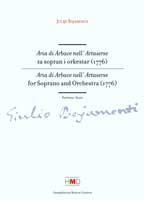
      Ivana TOMIĆ FERIĆ: The Musico-Theoretical Written Documents of Julije Bajamonti (1744-1800): Dictionary of Music, Transcription, Translation, Comments

    4. RECENZIJE, PRIKAZI I INFORMACIJE O PUBLIKACIJAMA – REVIEWS AND INFORMATION ON PUBLICATIONS

      • Leon Stefanija: Zgodovinsko-teoretski oris, Filozofska fakulteta, Oddelek za muzikologijo, Ljubljana 2004, 218 str., ISBN 961-237-103-2 (Dalibor DAVIDOVIĆ)
      • Howard Mayer Brown – Louise K. Stein: Glazba u renesansi (Music in the Renaissance), s engleskog preveo Stanislav Tuksar, Hrvatsko muzikološko društvo (Biblioteka Opća povijest glazbe, sv. 2), Zagreb 2005, 416 str., ISBN 953-6090-24-4 (Koraljka KOS)
      • Mladen Urem – Lovorka Ruck – Boris Zakošek – Igor Žic: Pavica Julija Kaftanić (1890-1977), Glosa d.o.o., Rijeka 2005, 82 str., ISBN 953-6081-42-3 (Koraljka KOS)
      • Emin Armano: Orgulje hrvatskih graditelja, tragom Ladislava Šabana, Jakša Zlatar, Zagreb 2006, 502 str., ISBN 953-7168-03-4 (Edo ŠKULJ)
      • Norton Dudeque: Music Theory and Analysis in the Writings of Arnold Schoenberg (1874-1951), Ashgate Publishing, Aldershot – Burlington (VT) 2006, 274 str., ISBN 0-7546-4139-2 (Marija BENIĆ ZOVKO)
    5. Redakcija zaključena / Contents fixed: 21. 12. 2006

  • ARTI MUSICES 37/1 (2006)

    Arti music., god. 37, br. 1, Zagreb 2006.

    SADRŽAJ - CONTENTS

    1. IZVORNI ZNANSTVENI ČLANCI - ORIGINAL SCIENTIFIC PAPERS

      • Rozina PALIĆ-JELAVIĆ: Antun Dobronić i sakralna glazba

        Nacrtak:
        Na području musicae sacrae Antun Dobronić je djelovao kao skladatelj, glazbeni pisac i kritičar, zborovođa i orguljaš, ali i kao melograf, istraživač te zapisivač narodnih napjeva, naposlijetku i kao predavač. Kao skladatelj ostvario je manji broj djela različitih po vrsti: skladao je mise, motete, solo popijevke, vokalno-orkestralnu suitu, glazbeno-scensko djelo (scensku glazbu za crkveno prikazanje). S obzirom na izvođački sastav skladao je glasovirske, vokalne – solističke i zborske – te veće vokalno-instrumentalne skladbe. Dobronićev nevelik sakralni opus obuhvaća izvorne skladbe, obradbe te harmonizacije nabožnih napjeva. Njegova se sakralna djela mogu promatrati i s obzirom na namjenu i/ili pripadnost vezanu uz sadržaj i značajke religijskih tekstova (kao crkvene, liturgijske i općenito duhovne skladbe) ali i prema njihovu raznolikom dometu i umjetničkoj vrijednosti. Prema opsegu uglazbio je složenija i dulja djela kao i kraće skladbe poput crkvenih popijevaka, obradba i harmonizacija napjeva. Razmjerna (ne)prisutnost pojedinih sakralnih skladba u izvođačkoj praksi nekad i danas ukazuje na ozračje koje je pridonosilo njihovoj slabijoj ili boljoj recepciji, a posljedica je to i činjenice da je tek malen broj Dobronićevih djela objavljen tiskom. Kao glazbenik, koji se jednakim intenzitetom bavio glazbeno-spisateljskim, publicističkim i kritičarskim radom, dotakao se Dobronić – među ostalim temama što ih je iznosio u oko 750 svojih članaka, studija, eseja, kritika, rasprava, polemika – i onih vezanih uz crkvenoglazbenu problematiku. Surađivao je i objavljivao u gotovo svim stručnim i glazbenim časopisima. Kao učitelj, u mnogim je mjestima bio promotorom crkvene glazbe; njegovim su zauzimanjem utemeljena pjevačka društva i amaterski zborovi, u kojima je djelovao kao zborovođa i orguljaš. Naposlijetku, kao melograf, sabrao je i klasificirao niz rukopisnih zbirki vokalne i instrumentalne tradicijske građe, među kojima se nalaze i crkveni napjevi prikupljeni u Jelsi tijekom 1938. i 1946. godine.

        Summary: Antun Dobronić and Sacred Music

        Antun Dobronić worked as a composer, music writer and critic, choir-master and organist in the field of musica sacra, but also as a melographer, researcher and collector of folk tunes, and, finally, as a teacher. As a composer he wrote a small number of works distinguished by diverse genres of music: he composed masses, motets, solo songs, a vocal-orchestral suite, and stage music (incidental music for a mystery play). According to the performing ensemble, he composed piano, vocal-solo and choral compositions – and larger vocal-instrumental compositions. Dobronić’s rather small sacred opus encompasses original compositions and arrangements and harmonisations of church vernacular tunes. His sacred works can also be viewed according to their purpose and/or to their connection to the content and characteristics of religious texts (as church, liturgical and generally spiritual compositions), but also according to their diverse range and artistic values. According to scope, he set to music both more complex and longer works (Slavenska misa u čast Bl. Djevice Marije od Račića u Jelsi [Slavic Mass in hon. B. Mariae Virg. of Račić in Jelsa], Misa za mrtve [Mass for the Dead], Prikazanje od poroda Jezusova / Betlehemska zvijezda [Mystery of the Birth of Jesus / The Star of Bethlehem], Stabat Mater, and Motet), as well as shorter compositions such as church songs, arrangements and harmonisations of tunes. The relative presence/absence of some sacred compositions in performing practice - then and now - points to the atmosphere that contributed to their poor or improved reception; and that was also the consequence of the fact that only a small number of Dobronić’s works were published (among the sacred works: Slavenska misa u čast Gospe od Račića u Jelsi [Slavic Mass in hon. Of Our Lady of Račić in Jelsa] and Seoske božićne popijevke iz Međimurja [Rural Christmas Songs from Međimurje]). Among other themes presented in his ca 750 articles, studies, essays, critiques, papers, and polemics, Dobronić, being a musician engaged with equal intensity in music-writing, journalistic and critical work, also touched on those connected with church music issues. He collaborated and published in almost all professional and musical journals (Sv. Cecilija, Glazbeni vjesnik, Muzika, Zvuk, Ćirilometodski vjesnik, Vienac, Kulisa, Narodni učitelj, Hrvatska pozornica, Glazbeni i kazališni vjesnik) as well as in Novosti, Narodni list, Narodne novine, Jutarnji list, Gospodarstvo, Hrvatski krugoval, Jugoslovenska reč etc. As a teacher he used to be a promoter of church music in many places; singing societies and amateur-choirs, in which he worked as choirmaster and organist, were founded through his efforts. In the end, as the melographer he collected and classified a series of manuscript collections of vocal and instrumental traditional material, including church tunes collected in Jelsa during 1938 and 1946.

      • Mirjana ŠKUNCA: Dobronićev Karneval – korak prema novim obzorima

        Nacrtak:
        Za svoju orkestralnu skladbu Karneval, praizvedenu u Zagrebu u veljači 1916. godine, Antun Dobronić (1878.-1955.) je izjavio da je “njegov prvi evolucioni moment” na putu do vlastite estetike, djelo u kojemu je “kroz čiste klasične forme a modernim kompozicijskim sredstvima u sebi i za sebe riješio problem spoja apsolutne i programske muzike.” Analizom koja slijedi želi se ukazati da je Dobronićev Karneval partitura pionirskog značenja u nas, jer pokazuje da je Dobronić uz Blagoja Bersu unio u hrvatsku glazbu duh i sredstva glazbenog ekspresionizma, i to u vrijeme u kojemu je taj stil u bliskom europskom susjedstvu davao svoje zrele plodove.

        Summary: Summary: Karneval by Dobronić – a Step toward New Horizons

        At „the first symphonic concert of Croatian young composers“ held in February in 1916 in Zagreb, which was later recognized by Croatian musicology as a music event of crucial, historical significance in the development of Croatian music, Antun Dobronić's (1878-1955) composition Karneval [Carnival] was performed for the first time, together with compositions by Krešimir Baranović, Božidar Širola, Franjo Dugan, Svetislav Stančić and Dora Pejačević. Though Dobronić had until then (he was 38 years old) already earned a reputation through his dedicated and vivid pedagogical, performing and animation activities, he found his way to Zagreb only by way of his polemical journalistic pen, by his comments and criticism on music performances, and his reviews on music editions on the pages of an imposing number of newspapers throughout Croatia and even abroad, as well as by his reflections on music and on the „musical chances and failures“ in Croatia (published in two books only in 1908) and the well-received ethnomusicological study Ojkanje (Wailing Folk Singing, 1915.). He had already for some ten years been composing, but he started adding opus numbers only after he came back from his music studies in Prague. He treated those works as his new, real beginnings as a composer. One of the first later compositions was op. 2, the already cited Karneval, which was composed during the time he spent composing in Split (1912-1916). Stressing the dramatic character of this music, Dobronić attached a written commentary as instructions and a guide to the score of his three-movement cycle for a big orchestra, and added the subtitle Portret u tonovima (Portrait in Tones) and/or Simfonijski portret (Symphonic Portrait) to the title of the work. He believed that the composition was his “first evolutionary moment” on the way to his own aesthetics; a work in which “through pure classical forms and with modern compositional means, he solved the problem of the integration between absolute and programme music inside himself and for himself”. By the arrangement of tempo and character, the three movements of Karneval justify the title and do not disrupt the frames of the standard three-movement symphonic cycle. However, the resemblance and affinity to the inherited models largely stop here, since the form alone of certain movements, and, in particular, the ways in which Dobronić uses other means of musical expression (melody, keys use, chords, meter and rhythm, tempo, dynamics and agogics nuances, and instrumentation) are different, shockingly new in both the milieu in which the work was created (Split) as well as in the milieu in which it should have become a reality (in Zagreb and in Croatia). That score is of pioneer significance in Croatia, because it demonstrates that Dobronić, along with Bersa, brought the spirit and means of music expressionism into Croatian music, at the time when that style was bearing its mature fruits in the immediate European neighbourhood.

      • Vjera KATALINIĆ: Elena Luisa Ragnina udata Pozza Sorgo, ili Elena Pucić-Sorkočević (1784.-1865.) – intelektualka i skladateljica

        Nacrtak:
        U dubrovačkim zbirkama čuva se tridesetak notnih svezaka srednjoeuropskih autora kojima je, prema potpisu, nekadašnja vlasnica bila Elena Luisa Ragnina. To je djevojačko prezime Elene (u literaturi poznatoj i kao Jelena) Pucić-Sorkočević, «prve hrvatske skladateljice», čije su skladbe ostale sačuvane. Dubrovkinja koja je – kao i neke njezine suvremenice – dobila humanističko obrazovanje, okušala se i u poeziji, a suvremenici su isticali njezinu vještinu sviranja klavira. Šest skladbi sačuvanih u samostanu Male braće u Dubrovniku te jedna sačuvana samo kao skica, očituju jednostavnu glazbenu fakturu svojstvenu amaterskim glazbenicima toga doba, a u književnom predlošku oslanjaju se na stihove Pietra Metastasija, najznačajnijeg libretista 18. stoljeća. Promatrajući skladbe Elene Pucić-Sorkočević u kontekstu njezine sveukupne intelektualne djelatnosti početkom 19. stoljeća, valja ustanoviti da u trenutku kad su nastale, nisu pretendirale biti koncertnim djelima namijenjenima široj publici, već su to poslanice pisane najbližima, a predstavljale su iskaze njezina duha i otmjenu razbibrigu svojstvenu njezinu staležu i sredini.

        Summary: Elena Luisa Pozzo Sorgo, née Ragnina, or Elena Pucić-Sorkočević (1784-1865): Female Intellectual and Composer

        Some thirty volumes of sheet music by Central European authors - the former owner of which, according to the signature, was Elena Luisa Ragnina – are kept in Dubrovnik collections. That is the maiden name of Elena (also known in literature as Jelena) Pucić-Sorkočević, “the first Croatian female composer”, whose compositions have been preserved. A female citizen of Dubrovnik who received a humanistic education like some of her female contemporaries, she tried her hand at poetry, while contemporaries emphasised her skill in playing the piano. Six compositions kept at the Franciscan Friars Minor Monastery in Dubrovnik as well as one composition preserved only in sketch form, show the simple music structure characteristic to amateur musicians of the time, while the literary model was the verse of Pietro Metastasio, the most important librettist of the 18th century. Observing Elena Pucić-Sorkočević’s compositions in the context of her overall intellectual activity at the beginning of the 19th century, it should be stated that they did not aspire at the time of their composition to be concert works intended for a wide audience, but were instead epistles written to loved ones as expressions of her spirit, and, at the very least, were a fashionable pastime characteristic to her social class and milieu.

    2. OTKRIĆA, NOVOSTI – NEW INSIGHTS

      Branko POLIĆ: Habent sua fata documenta – Pronađeni rukopis disertacije (1939.) Ericha Eliše Samlaića: O životu i djelu Vjenceslava Novaka

      Nacrtak:
      Doktorska disertacija Ericha-Eliše Samlaića (Karlovčići kraj Zemuna, 1913. – Jasenovački logor, 1944.) obranjena u Beogradu početkom 1941., pod naslovom O životu i djelu Vjenceslava Novaka, izgorjela je 6. travnja 1941. u velikom požaru tamošnje Narodne biblioteke, gdje je bila pohranjena. Spletom neobičnih slučajnosti, zaslugom g. Cvija Lokera, voditelja Historijskog arhiva Eventov u Jeruzalemu, saznali smo da je ondje sačuvan u potpunosti primjerak rukopisa disertacije na 218 stranica velikog formata, tvrdo ukoričena. Iz tog dragocjenog izvronika mogli smo steći uvid u kronologiju Novakova života, isprepletenu njegovom intenzivnom književnom, a usporedo i glazbenom djelatnošću. Zahvaljujući pomnu Samlaićevu istraživanju čovjeka, podjednako upućenog u književnost i glazbenu pedagogiju, to djelo iznosi i mnoge dotad neotkrivene pojedinosti. Osvrt koji donosimo isključivo je namijenjen otkrivanju glazbene komponente Samlaićeve disertacije.

      Summary: Habent sua fata documenta – Discovery of the Typescript of Erich-Eliša Samlaić's Doctoral Dissertation (1939): on the Life and Work of Vjenceslav Novak

      The doctoral dissertation of Erich-Eliša Samlaić (Karlovčići near Zemun, 1913 – Jasenovac Concentration Camp, 1944), defended in Belgrade at the beginning of 1941 under the title O životu i djelu Vjenceslava Novaka (On the Life and Work of Vjenceslav Novak), was burnt on April 6, 1941 in the conflagration of the National Library in Belgrade, where the dissertation was kept. In a web of peculiar coincidences, through the merit of Mr. C. Loker, the head of the Eventov Historical Archives in Jerusalem, we learnt that the Archives had a copy of fully preserved typescript of the dissertation on 218 large pages in a hardcover binding. From that precious source we were able to gain an insight into the chronology of Novak’s life interwoven with his intensive literary and concurrent musical activities. Thanks to Samlaić’s attentive research of the man, equally acquainted with literature and music pedagogy, the work also provides a host of formerly unknown details. The presented review is oriented exclusively to revealing the music components in Samlaić’s dissertation.

    3. SAŽECI MAGISTARSKIH I DOKTORSKIH RADOVA U MUZIKOLOGIJI – SUMMARIES OF M.A. AND PH.D. THESES IN MUSICOLOGY

      Alojzije SEDER: Evaluating the Tone Quality of Musical Instruments

    4. RECENZIJE, PRIKAZI I INFORMACIJE O PUBLIKACIJAMA – REVIEWS AND INFORMATION ON PUBLICATIONS

      • Annette Kreutziger-Herr: Ein Traum vom Mittelalter, Die Wiederentdeckung mittelalterlicher Musik in der Neuzeit, Böhlau Verlag, Köln-Weimar-Wien 2003, 425. str., ISBN 3-412-15202-1 (Hana BREKO KUSTURA)
      • John Haines: Eight Centuries of Troubadours and Trouveres: The Changing Identity of Medieval Music, Musical Performance and Reception Series, Cambridge University Press, Cambridge 2004, 360 str., ISBN 0-521-82672-1 (Hana BREKO KUSTURA)
      • Dalibor Paulik: Hrvatski operni libreto. Povijest, struktura i europski kontekst, Golden marketing – Tehnička knjiga, Zagreb 2005, 287 str., ISBN 953-212-115-3 (Ennio STIPČEVIĆ)
    5. IZVJEŠĆA O ZNANSTVENIM SKUPOVIMA – REPORTS ON CONFERENCES

      Beč – International Symposium „European Voices: Multipart Singing on the Balkans and in the Mediterranean“, 11.-13. 3, 2005. (Joško ĆALETA)

      New York – Music's Intellectual History: Founders, Followers & Fads. First Conference of the Répertoire International de Littérature Musicale. The City University of New York Graduate Center, 16.-19. 3. 2005. (Gorana DOLINER)

      Brescia – La musica e il sacro. XII Convegno internazionale sul Barocco padano (Secoli XVII-XVIII), 18.-20. 7. 2005. (Stanislav TUKSAR)

      Temišvar – Muzica – dialog intercultural. Confluenţe muzicale interculturale în Banat, 23.-25. 9. 2005. (Nada BEZIĆ)

      Varaždin – Znanstveni susret u povodu 20. obljetnice smrti akademika Ladislava Šabana, 26. 9. 2005. (Vedrana JURIČIĆ)

      Budimpešta – Opera as a Place of Representation. European Opera Houses in the 19th Century in Comparison, 13.-14. 10. 2005. (Markian PROKOPOVYCH, s engleskog preveo Stanislav Tuksar)

      Dubrovnik – 1. hagiografski skup. „Hagiografija: historiografija, izvori i metode“, 20.-23. 10. 2005. (Gorana DOLINER)

      Beč – „Ein Unerschöpflicher Reichthum an Ideen“. Komponisten zur Zeit Mozarts und Heute, 18.-20. 11. 2005. (Koraljka KOS)

    6. BIBLIOGRAFIJE – Bibliographies

      Bibliographia musicologica croatica. Addenda i radovi za 2003. godinu (Rozina PALIĆ-JELAVIĆ)

    7. Redakcija zaključena / Contents fixed: 5. 6. 2006.

  • ARTI MUSICES 35/2 (2004) (u tisku)

    Arti music., god. 35, br. 2, Zagreb 2004.

    SADRŽAJ - CONTENTS

    1. IZVORNI ZNANSTVENI ČLANCI - ORIGINAL SCIENTIFIC PAPERS

      • Ivano CAVALLINI: Uloga glazbe u dubrovačkom pastoralnom teatru u 16. stoljeću
        Summary: The Role of the Music in the Pastoral Theatre in Dubrovnik during the Sixteenth Century
      • Mirjana ŠKUNCA: Tko je Alberto Antonio Visetti?
        Summary: Who Was Alberto Antonio Visetti?
      • Lovorka RUCK: Glazbeni život u Rijeci u 19. stoljeću
        Summary: Music Life in Rijeka in the 19th Century
      • Marinela RUSKOVIĆ-KRIŠTIĆ: Nastanak oficija uz blagdan svetog Vlaha te himne svetog Vlaha nastale u prvoj polovici 20. stoljeća u arhivu dubrovačke katedrale
        Summary: The Creation of the Officium Accompanying the St. Blasius Festivity and the Hymns of St. Blasius in the First Half of the 20th Century in the Dubrovnik Cathedral Archives
    2. REFERAT - CONFERENCE PAPER

      Alma ZUBOVIĆ: Music of the Muslim People in Bosnia and Herzegovina at the Time of the Ottoman Administration - Musical Instruments
      Sažetak: Glazba Bošnjaka u Bosni i Hercegovini u doba otomanske uprave - glazbeni instrumenti

    3. SAŽETAK DOKTORSKE DISERTACIJE - SUMMARY OF THE PH.D. THESES

      Dalibor PAULIK: Libretto in the Croatian Opera and its Entrenchment in European and Croatian Theatrical Tradition

    4. RECENZIJE - REVIEWS

      Jerrold Levinson (ur.): The Oxford Handbook of Aesthetics, Oxford University Press, New York 2003. (Vesna ROŽIĆ)

    5. IN MEMORIAM

      Lovro Županović (1925.-2004.) (Rozina PALIĆ-JELAVIĆ)

      Chappell White (1920.-2004.) (Vjera KATALINIĆ)

    6. BIBLIOGRAFIJA - BIBLIOGRAPHY

      Bibliographia musicologica croatica 2002. (Rozina PALIĆ-JELAVIĆ)

    7. VIJESTI IZ HRVATSKOG MUZIKOLOŠKOG DRUŠTVA - NEWS FROM THE CROATIAN MUSICOLOGICAL SOCIETY

      Djelatnost HMD-a u razdoblju siječanj-prosinac 2004. (Stanislav TUKSAR)
    8. Redakcija zaključena 21. 12. 2004.

  • ARTI MUSICES 35/1

    Arti music., god. 35, br. 1, str. 3-105, Zagreb 2004.

    SADRŽAJ - CONTENTS

    1. IZVORNI ZNANSTVENI ČLANCI - ORIGINAL SCIENTIFIC PAPERS

      • Stanislav TUKSAR: Glazba, akademije i učena društva djelatna u hrvatskim zemljama u razdoblju od 16. do 18. st.
        Summary: Music, Academies and Learned Societies Active in the Croatian Lands from the 16th to the 18th Centuries
      • Vjera KATALINIĆ: Ponovno o jedinom pismu "nepismenog" Jarnovića: koncerti u revolucionarnom Dublinu
        Summary; A Letter of the "Illettré Jarnovick" Revisited: Concerts in Revolutionary Dublin
      • David MORRIS: The Daughters of Jarnović: a preliminary note
        Sažetak: Jarnovićeve kćeri: preliminarne bilješke
      • Nada BEZIĆ: Prilozi za biografiju Jurja Karla Wisnera von Morgensterna, uoči 150. obljetnice njegove smrti
        Summary: On the Coming 150th Anniversary of the Death of Georg (Juraj) Karl Wisner von Morgenstern: Supplements to His Biography
    2. OTKRIĆA, NOVOSTI - NEW INSIGHTS

      Koraljka KOS: Prilog skladateljice Dore Pejačević hrvatskoj estetici glazbe

      Zusammenfassung: Der Beitrag der Komponistin Dora Pejačević zur kroatischen Musikästhetik

    3. RECENZIJE I PRIKAZI - REVIEWS AND INFORMATION ON BOOKS

      Zdravko Blažeković: Glazba osjenjena politikom. Studije o hrvatskoj glazbi između 17. i 19. stoljeća, Matica hrvatska, Zagreb 2002. (Sanja MAJER-BOBETKO)

    4. IZVIJEŠĆA O ZNANSTVENIM SKUPOVIMA - REPORTS ON CONFERENCES

      • Venecija, Italija - 27. studijski seminar ciklusa Glazba starih mediteranskih civilizacija: "Monodijsko liturgijsko pjevanje Akvileje i patrijarhije Akvileja i susjednih europskih regija, 2-4. 5. 2003. (Hana BREKO KUSTURA)
      • Venecija, Italija - XXIX. Seminario di Studio, La Musica nelle antiche civilt? Mediterranee, Nazionalismo e cosmopolitismo in musica: La questione Adriatica, V incontro Italo-Croato, Fondazione levi, 8.-10. 5. 2003. (Stanislav TUKSAR)
      • Tallin, Estonia - IAML Annual Conference, 6. - 11. 7. 2003. (Vedrana JURIČIĆ)
      • Cardiff - 39th RMA Annual Conference 2003: Music Historiography, 12.-14. 9. 2003. (Sanja MAJER-BOBETKO)
      • Bonn, Njemačka - Međunarodni znanstveni simpozij "Dalmatien als Raum europäischer Kultursyntese", Rheinische Friedrich-Wilhelms-Universität, 6.-10. 10. 2003. (Stanislav TUKSAR)
      • Ljubljana, Slovenija - Glasbena identiteta Srednje Evrope / Musikalische Identität Mitteleuropas, 23.-24. 10. 2003. (Vjera KATALINIĆ)
      • Zagreb - Proslava 100. obljetnice rođenja Božidara Kunca (1903.-1964.) / 100th Köln, Njemačka - e"Musik und Verstehen - Međunarodni muzikološki simpozij, 8.-11. 11. 2003. (Zdenka KAPKO-FORETIĆ)
      • Anniversary Celebration of the Birth of Božidar Kunc (1903.-1964.), 20.-22. 11. 2003. (Sanja MAJER-BOBETKO)

    Redakcija zaključena / Contents fixed: 30. 6. 2004.


Hrvatsko
muzikološko
društvo

Croatian
Musicological
Society

Opatička 18
HR-10000 Zagreb
Croatia
tel :+385 1 489 5320
fax:+385 1 468 4701
www.hmd-music.hr

Arti music., god. 37, br. 2, Zagreb 2006.
- Izvorni znanstveni članci - Otkrića, novosti - Sažeci magistarskih i doktorskih radova u muzikologiji - Recenzije, prikazi i informacije o publikacijama

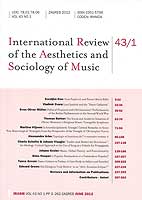
International Review of the Aesthetics and Sociology of Music
IRASM
IRASM, Vol. 38 No. 1, Zagreb
IRASM, Vol. 37 No. 2, Zagreb

Jacques Chailley
Povijest glazbe Srednjega vijeka

Knjiga Povijest glazbe Srednjega vijeka u francuskom izvorniku dio je serije „Collection hier“ poznatog francuskog izdavača Presses Universitaires de France i predstavljala je niz desetljeća nakon prvog izdanja 1950. standardni udžbenik za glazbu Srednjega vijeka na francuskim sveučilištima.


Copyright © 2002-2010 HMD All rights reserved.    * * *    Designed & programmed by J-SISTEM